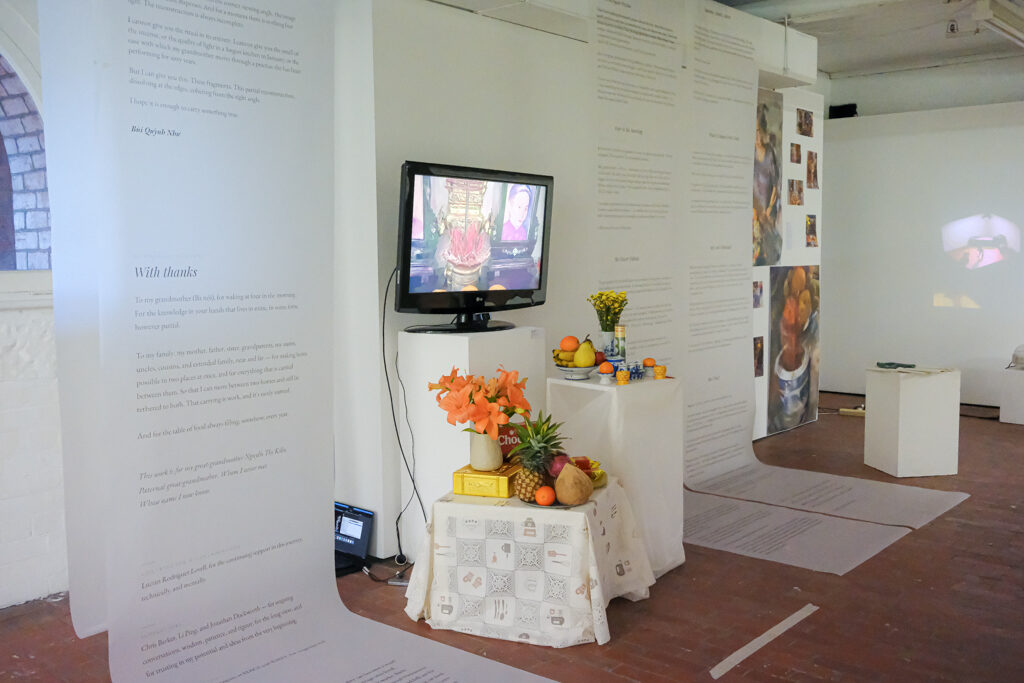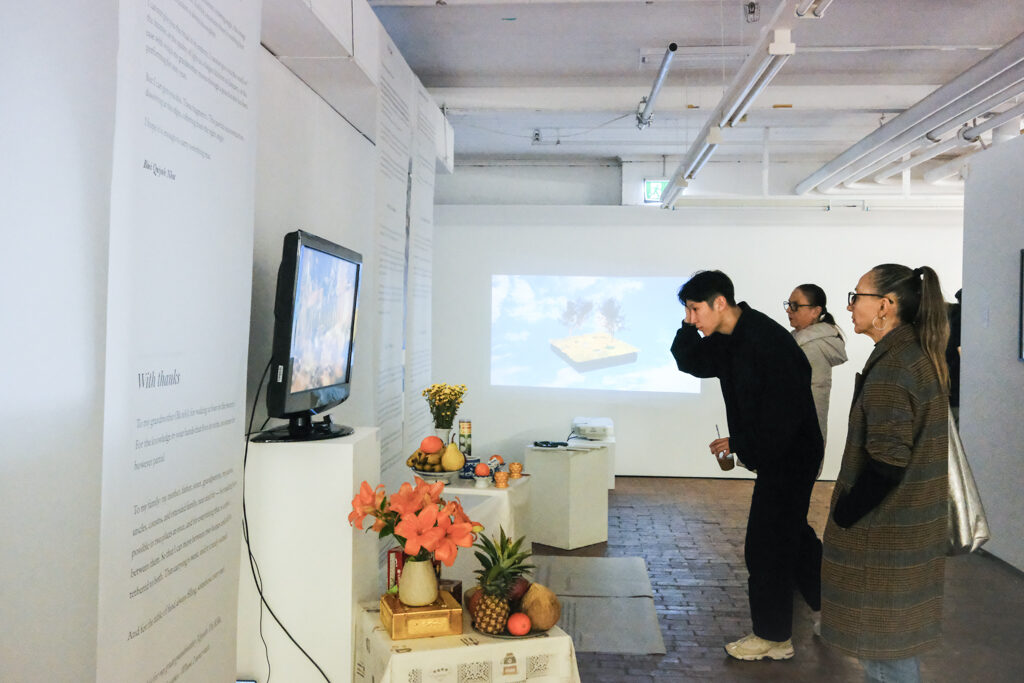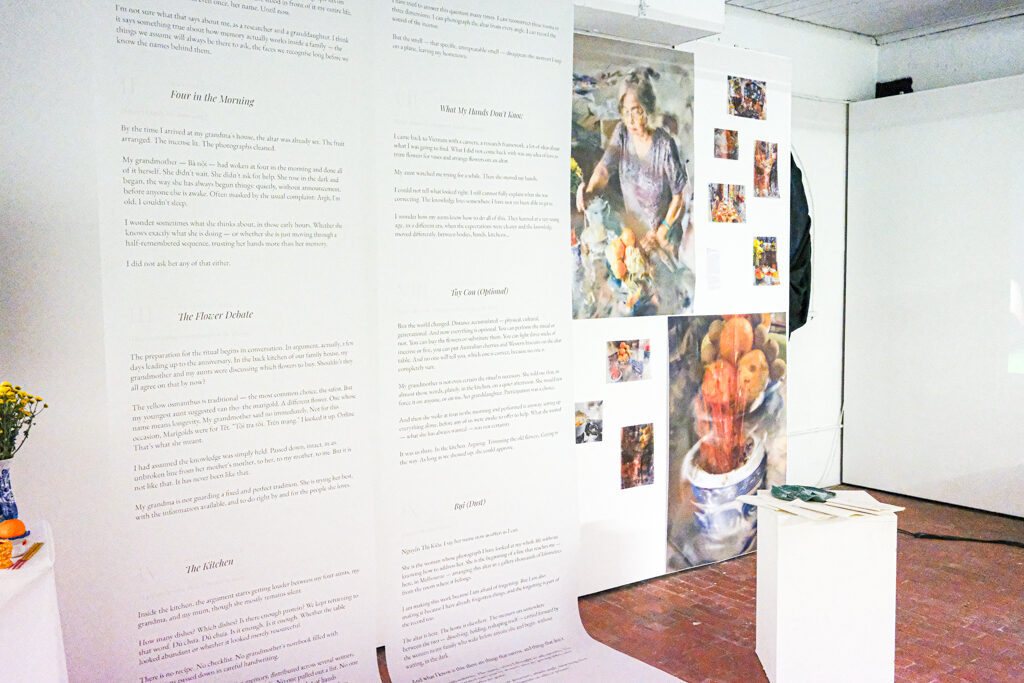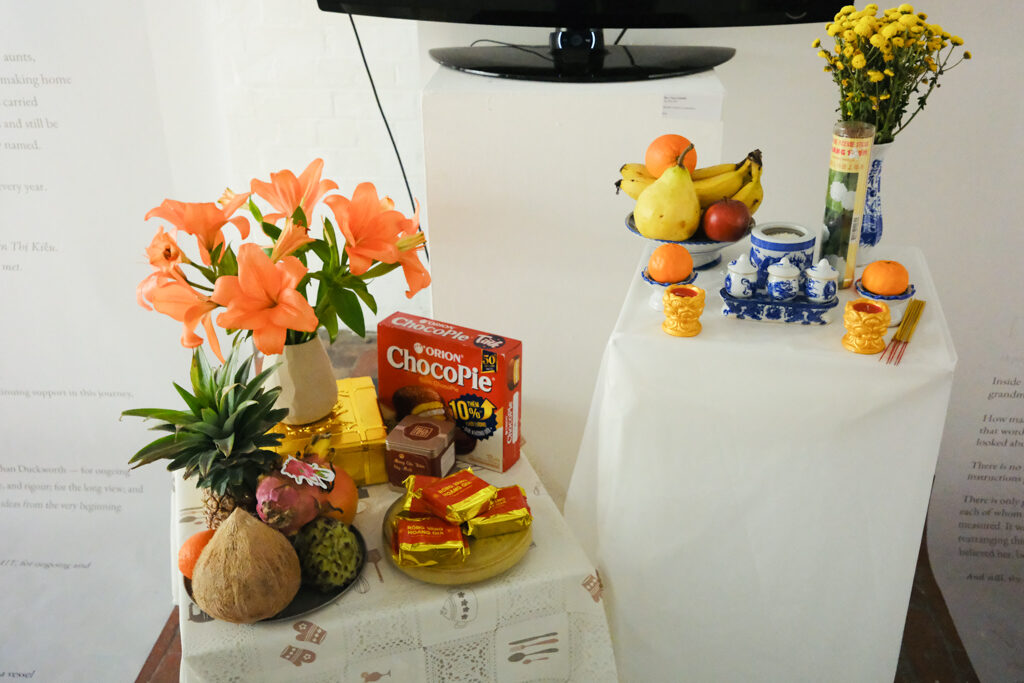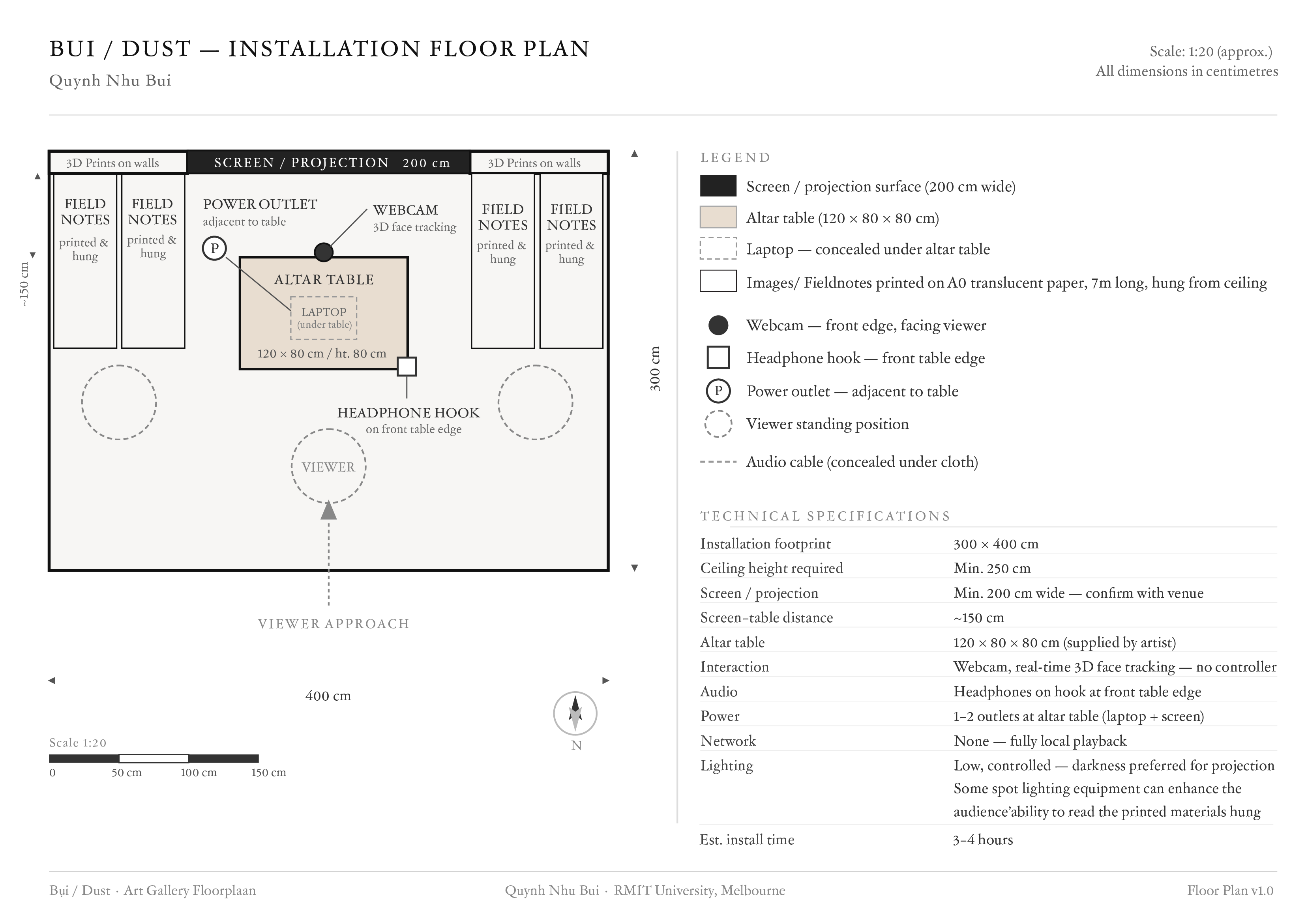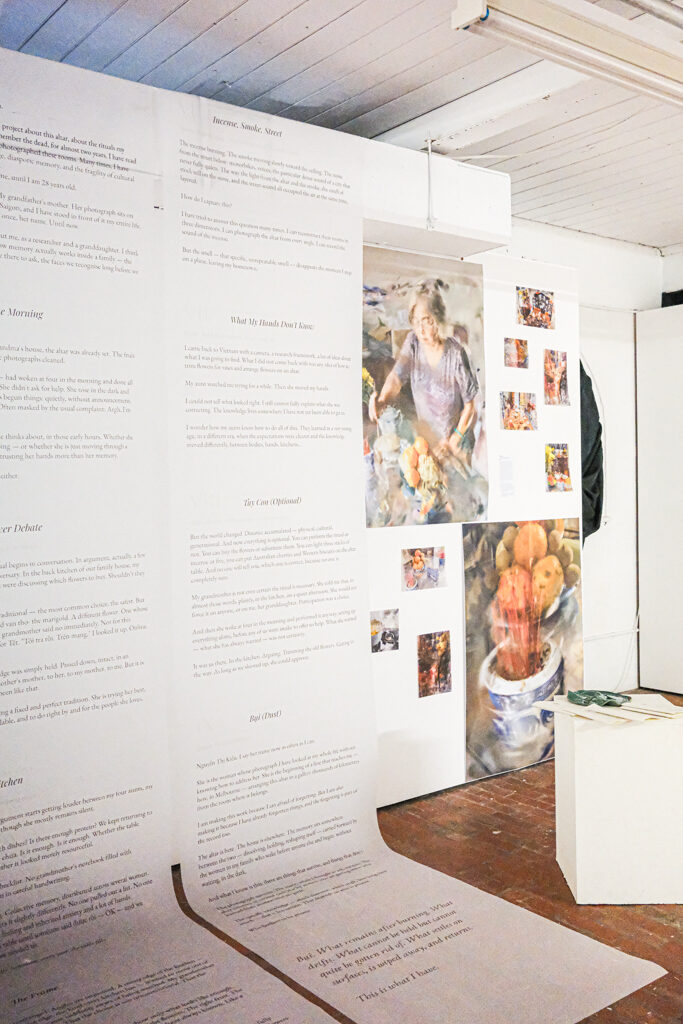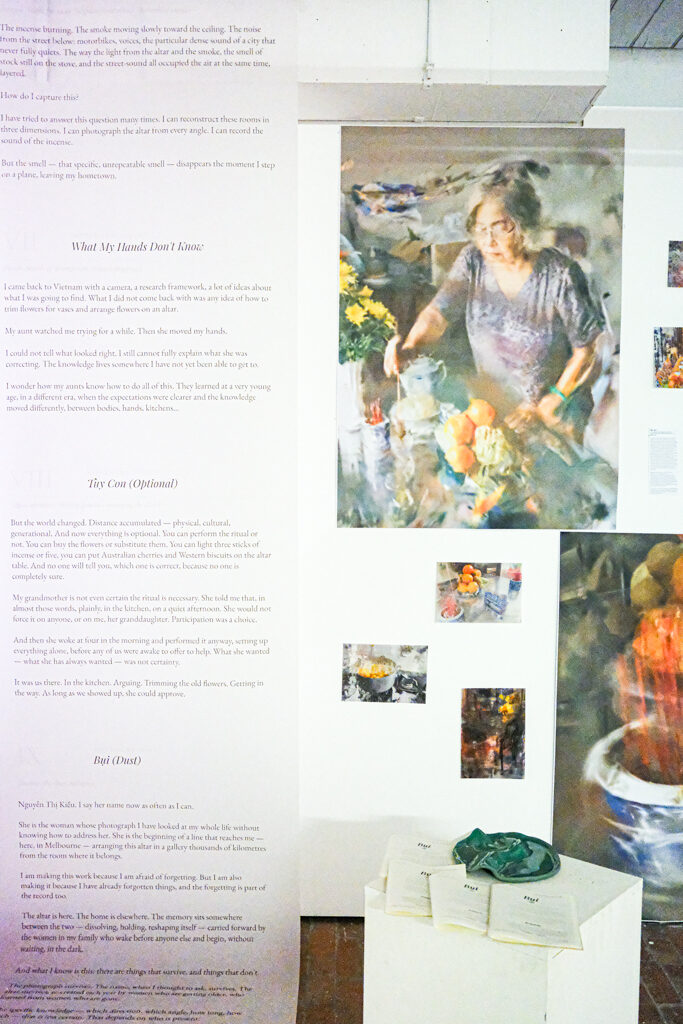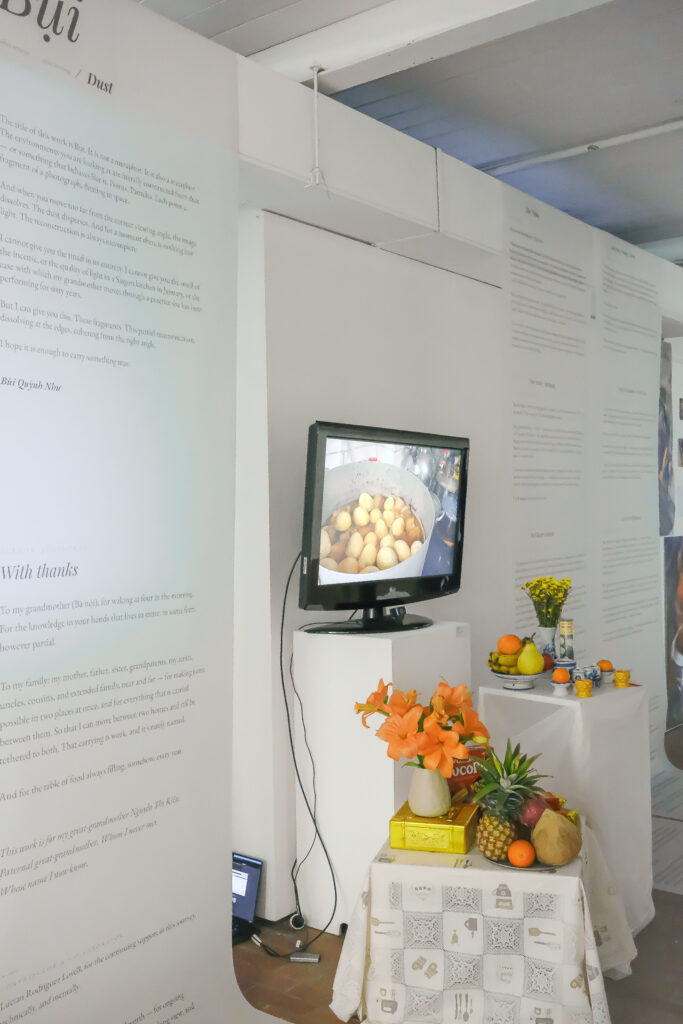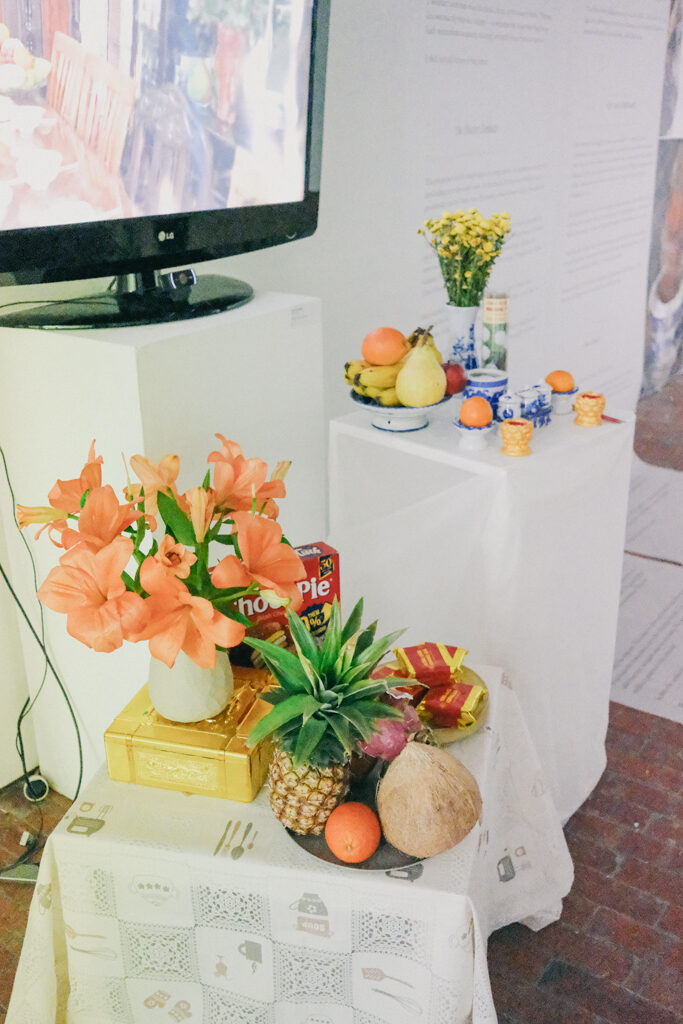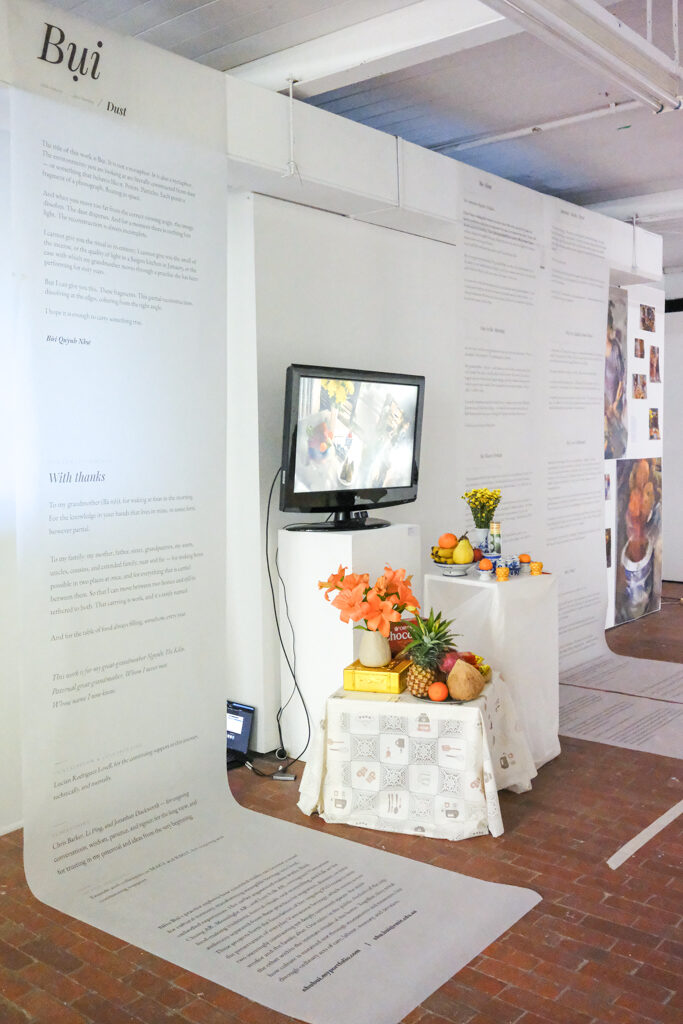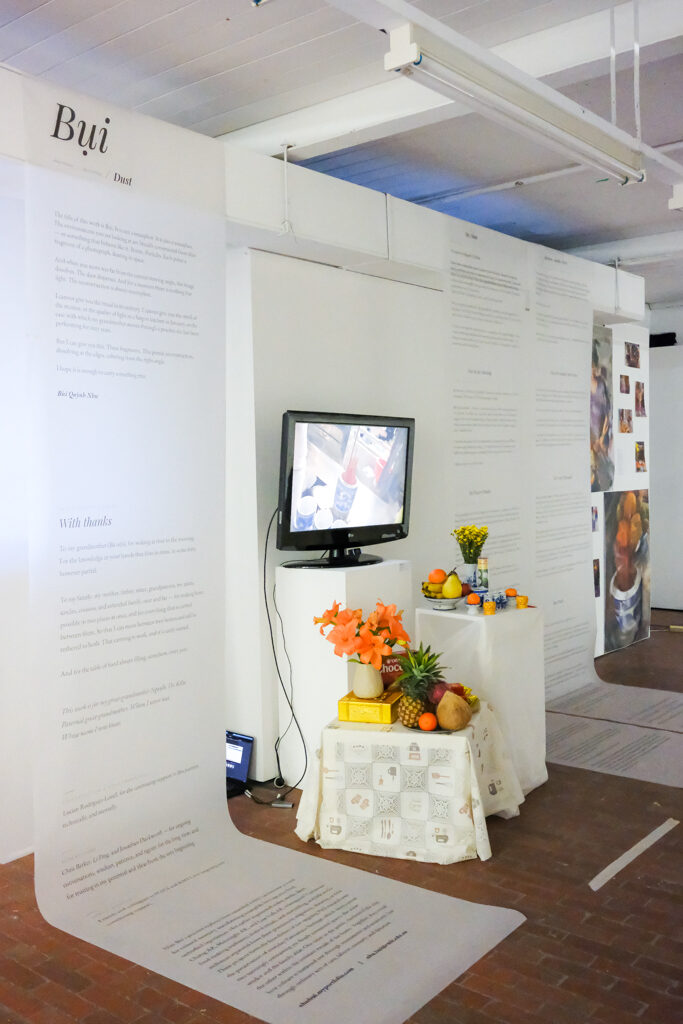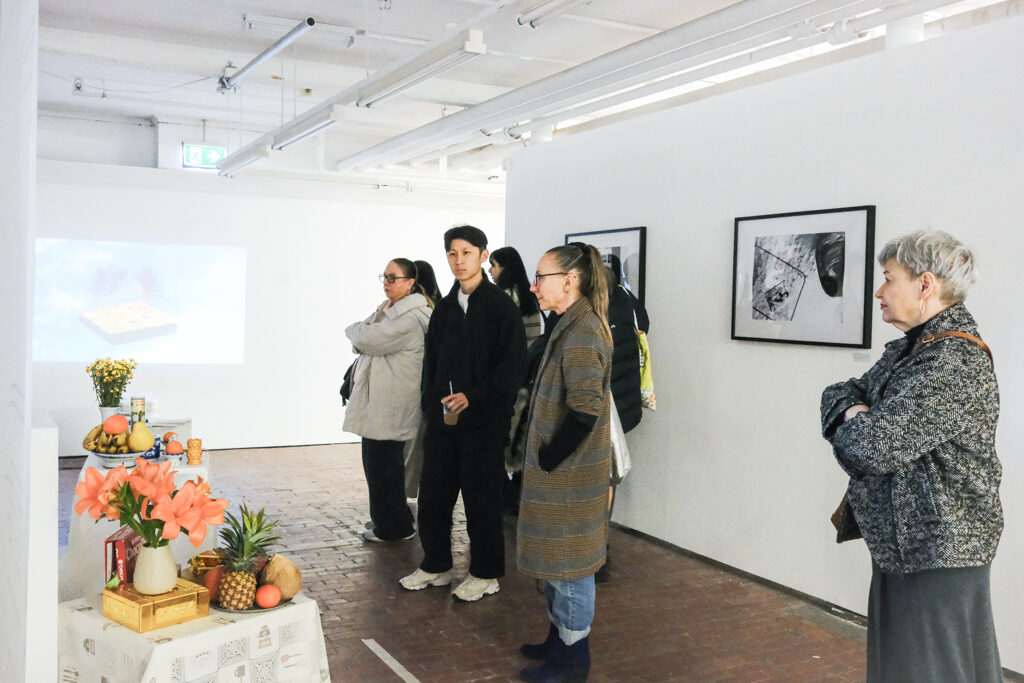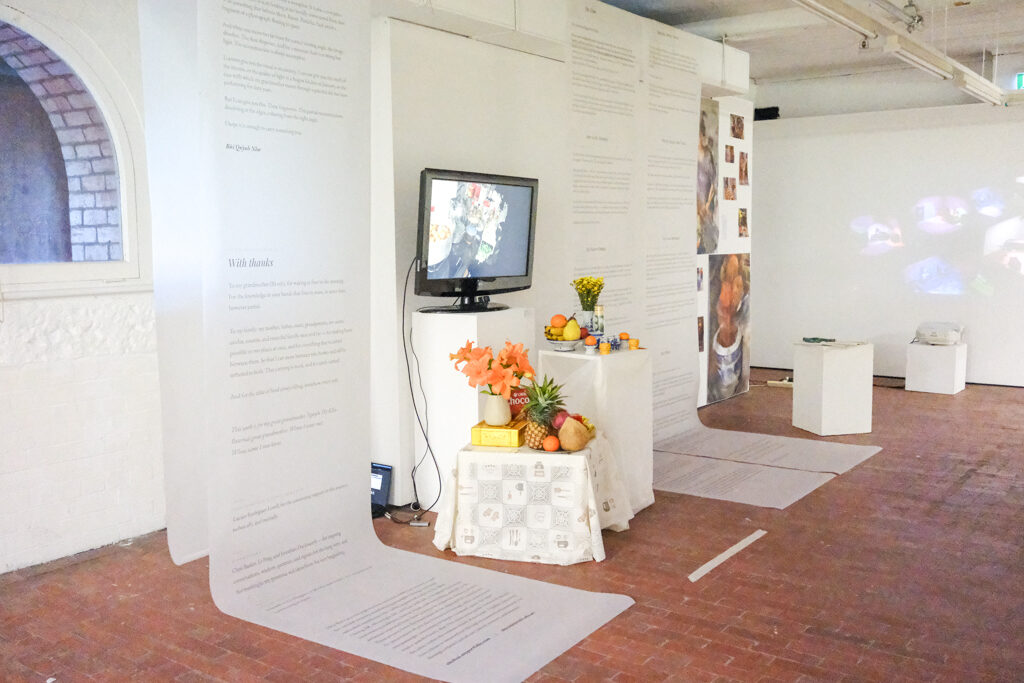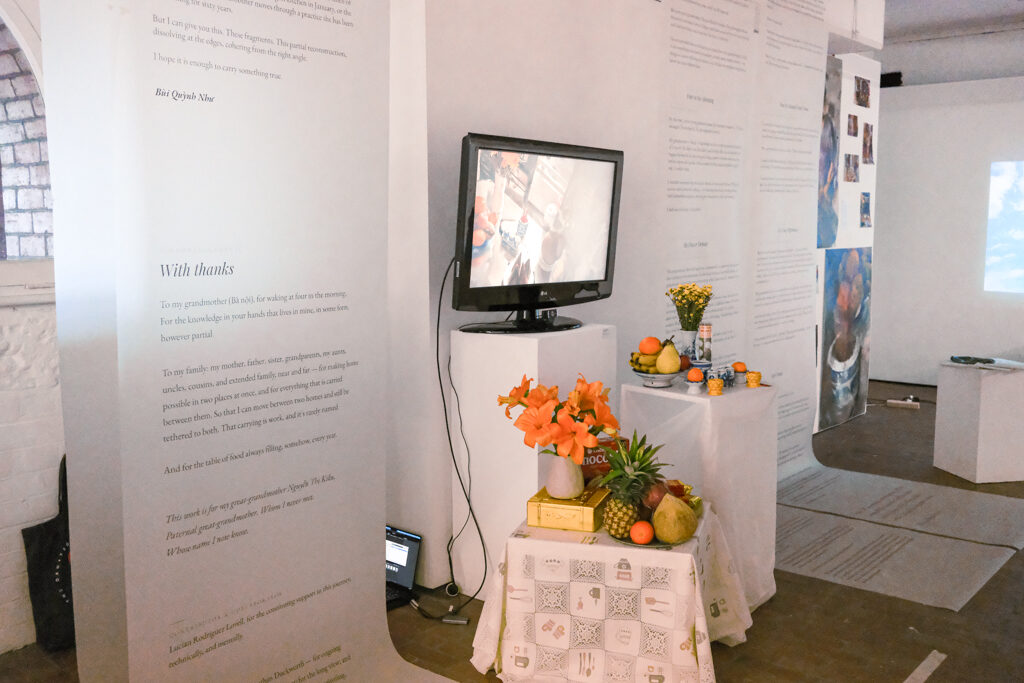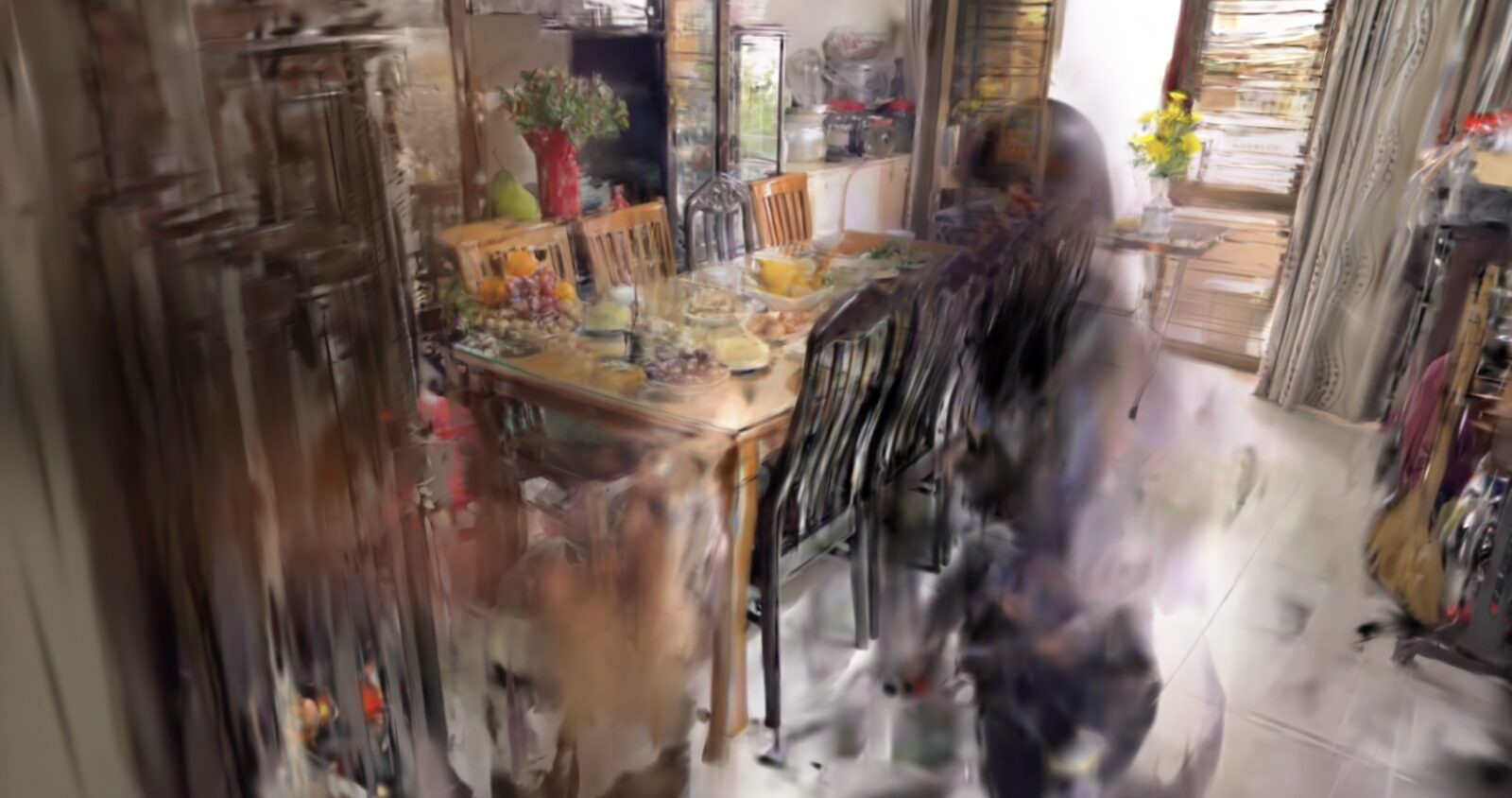
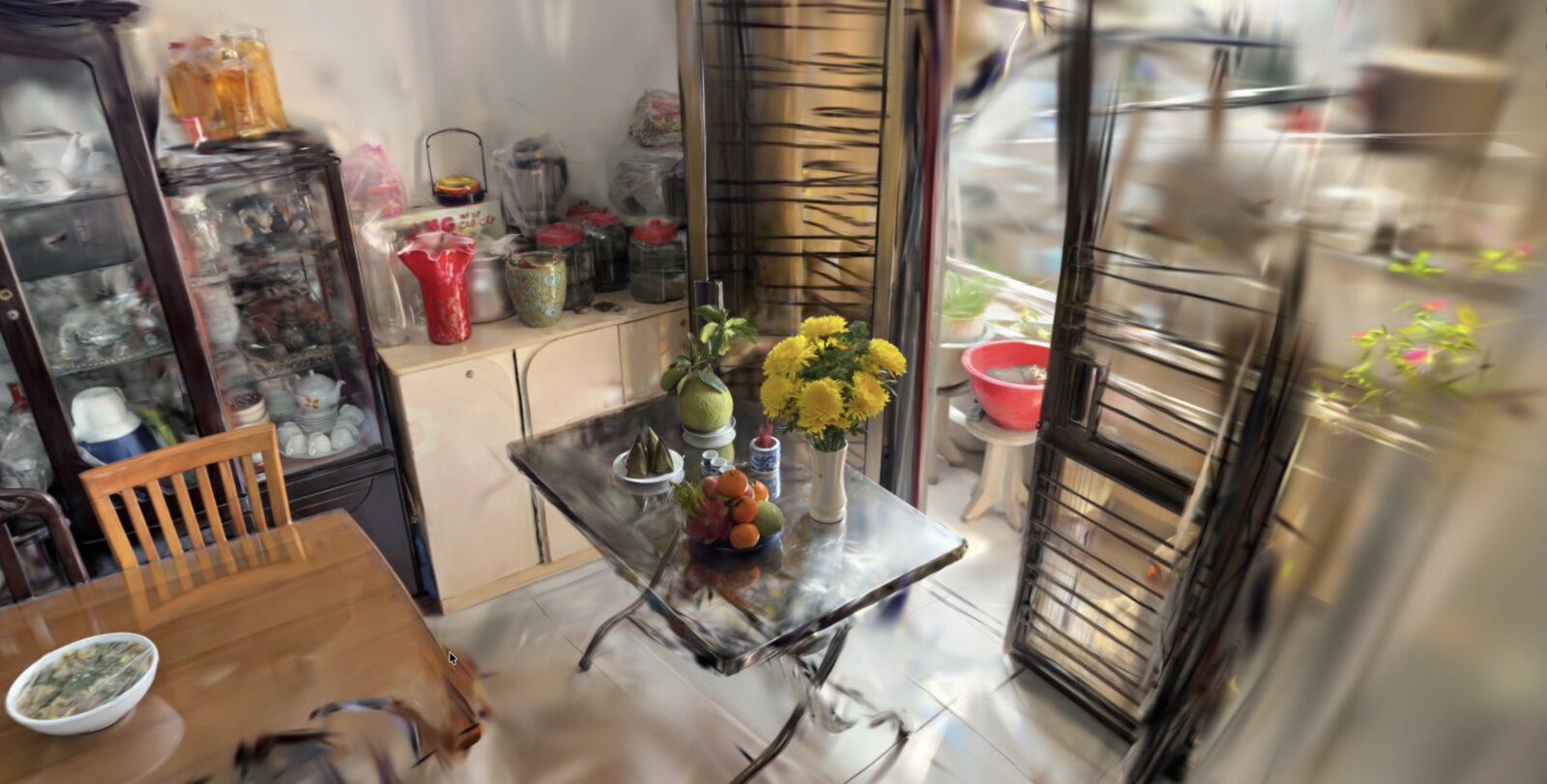
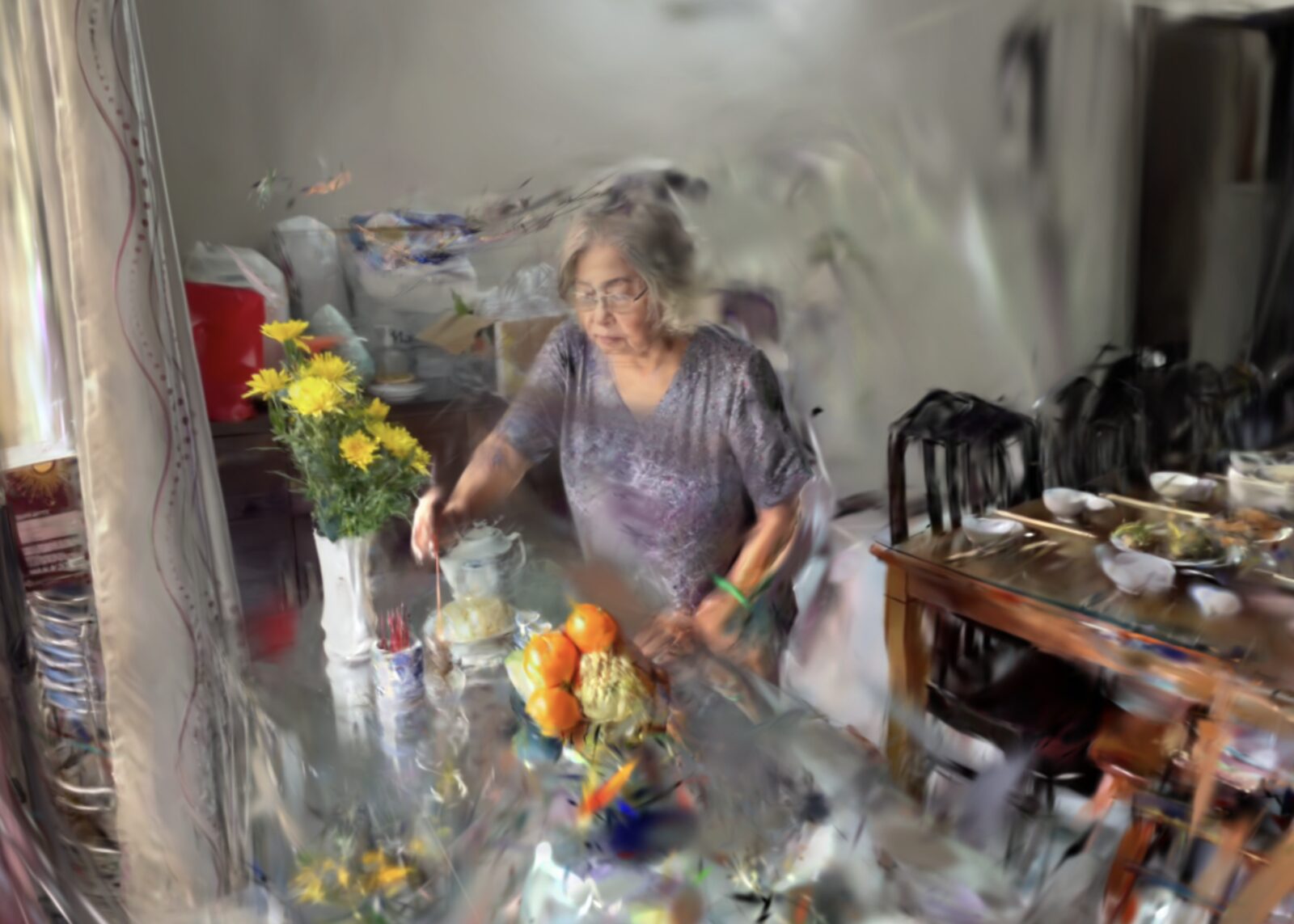
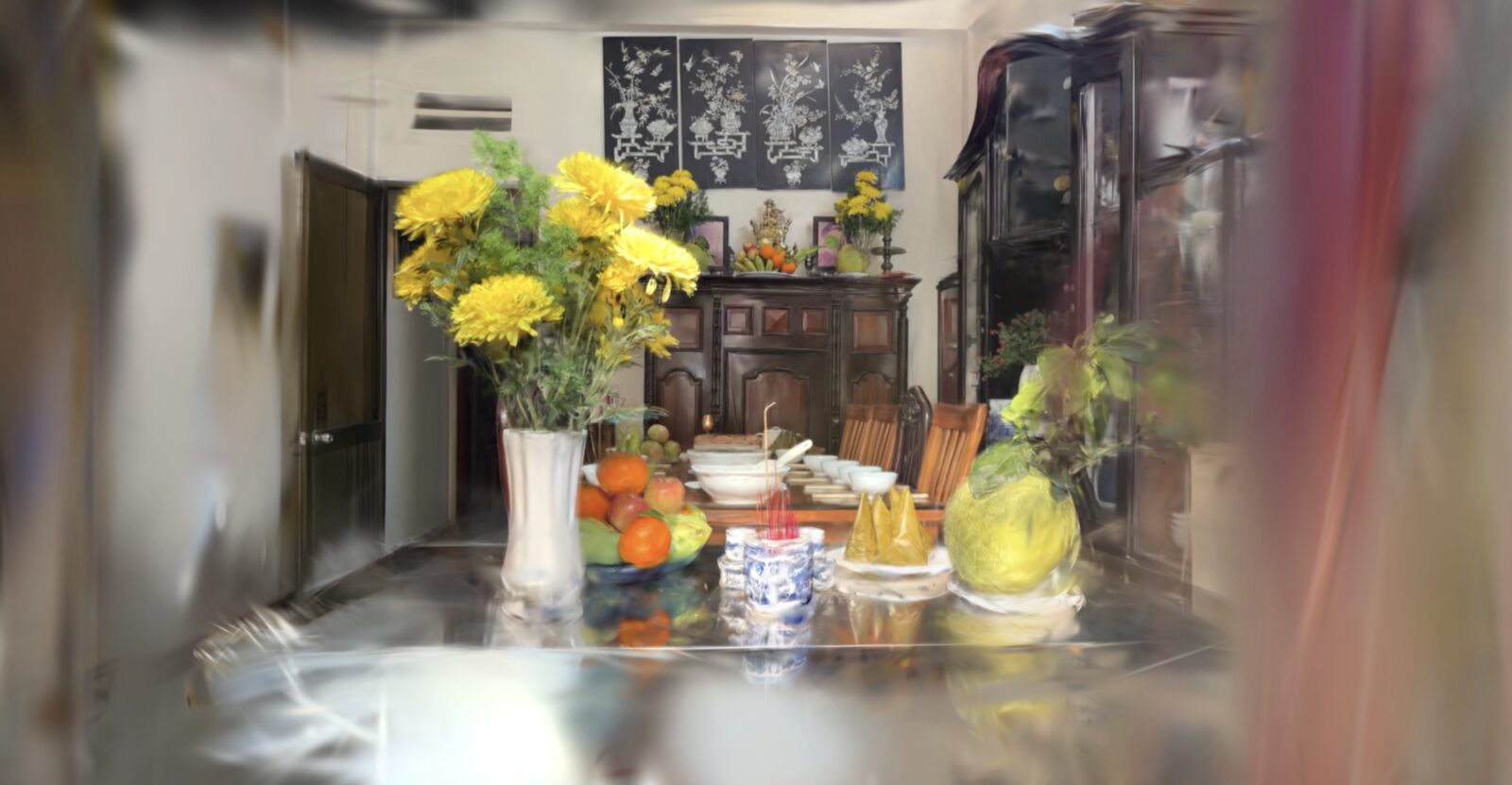
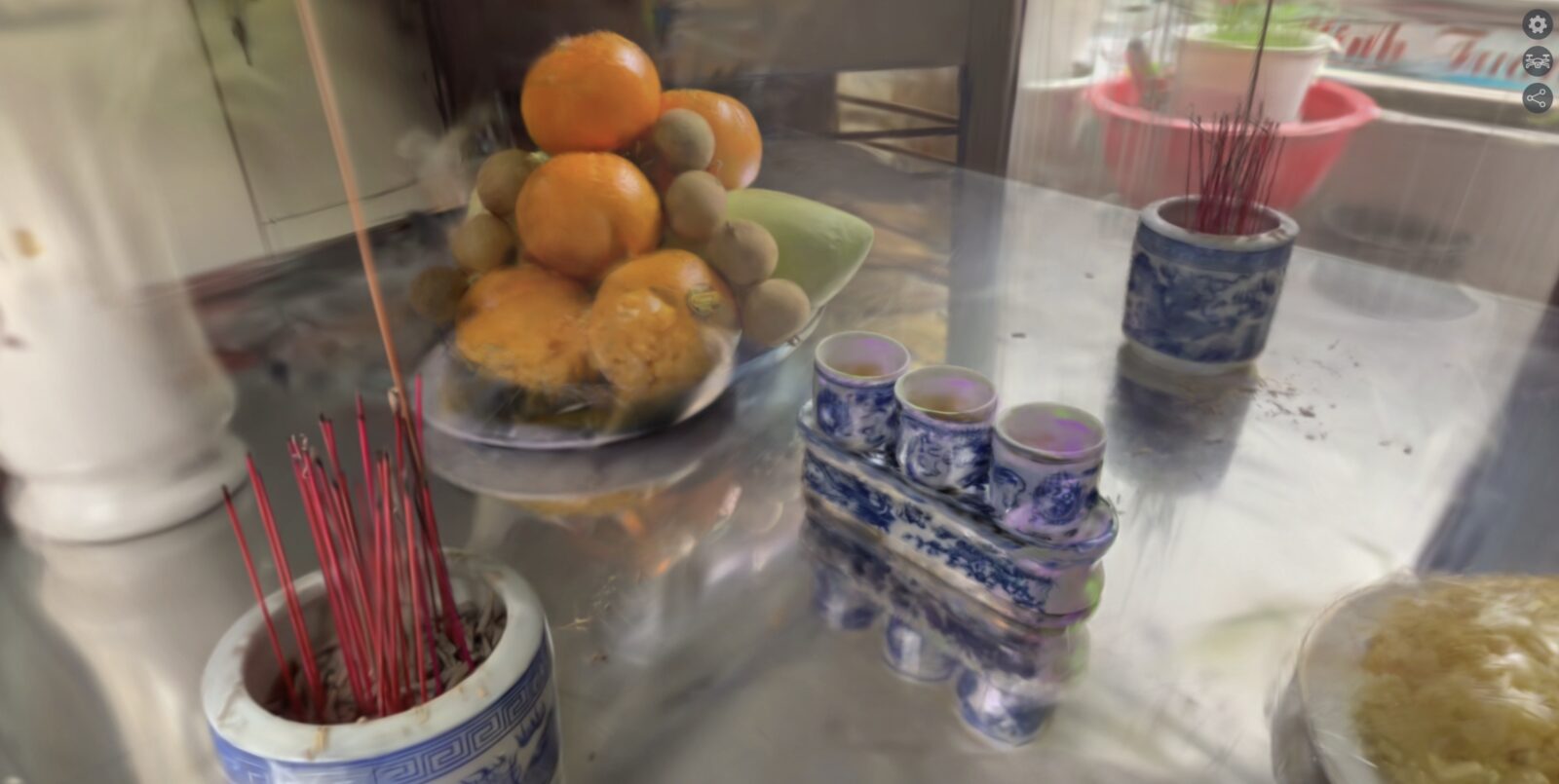
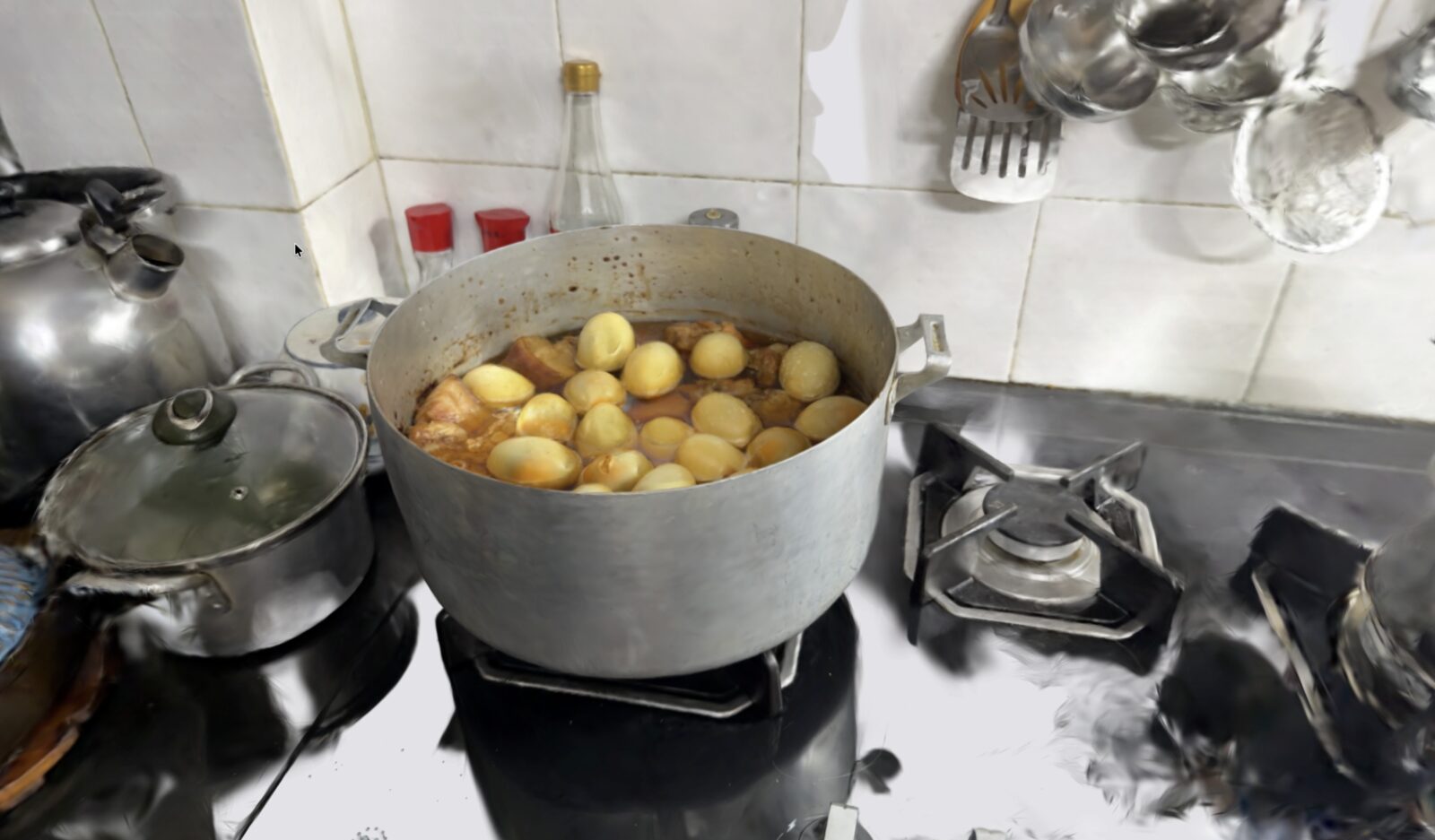
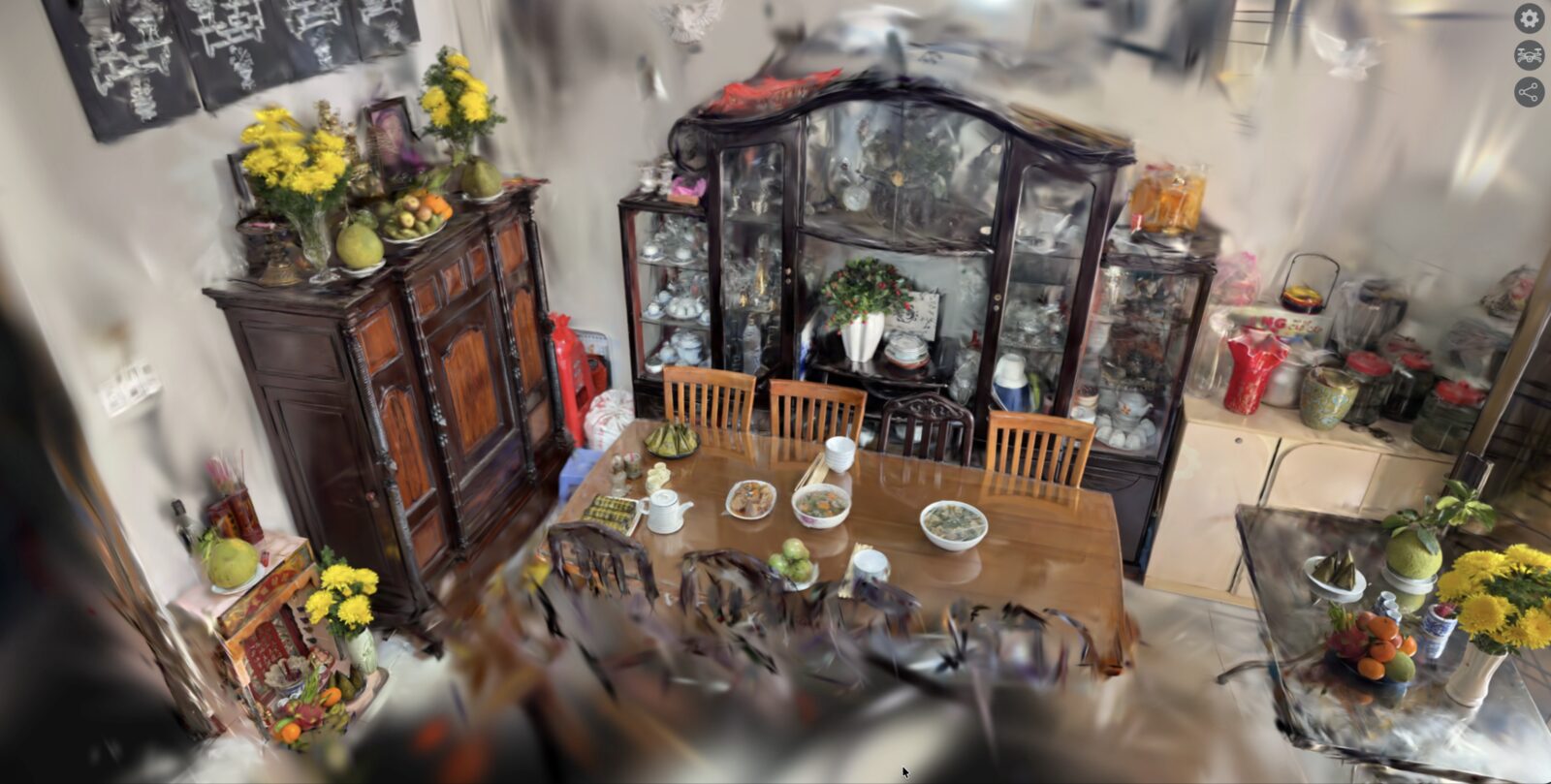
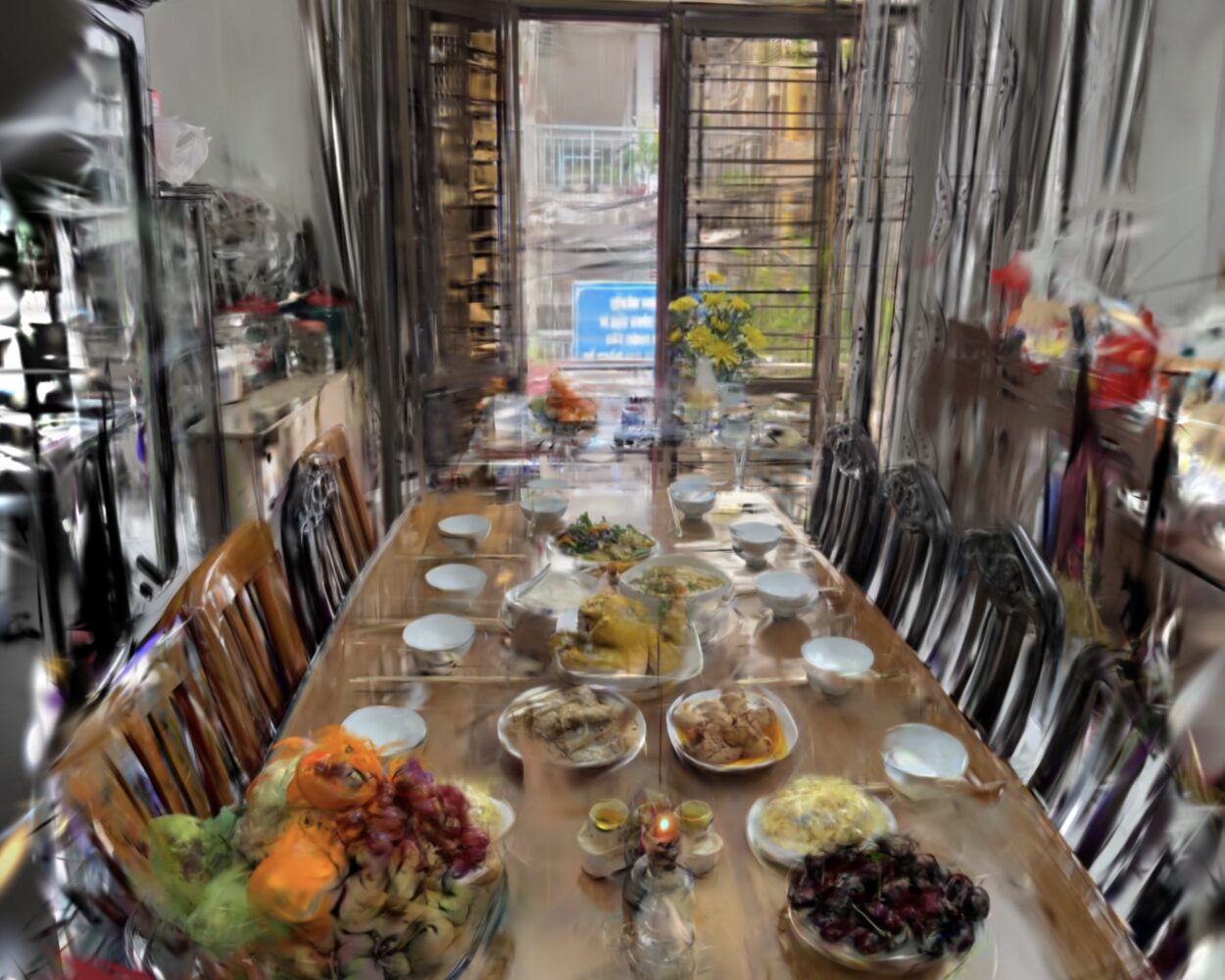
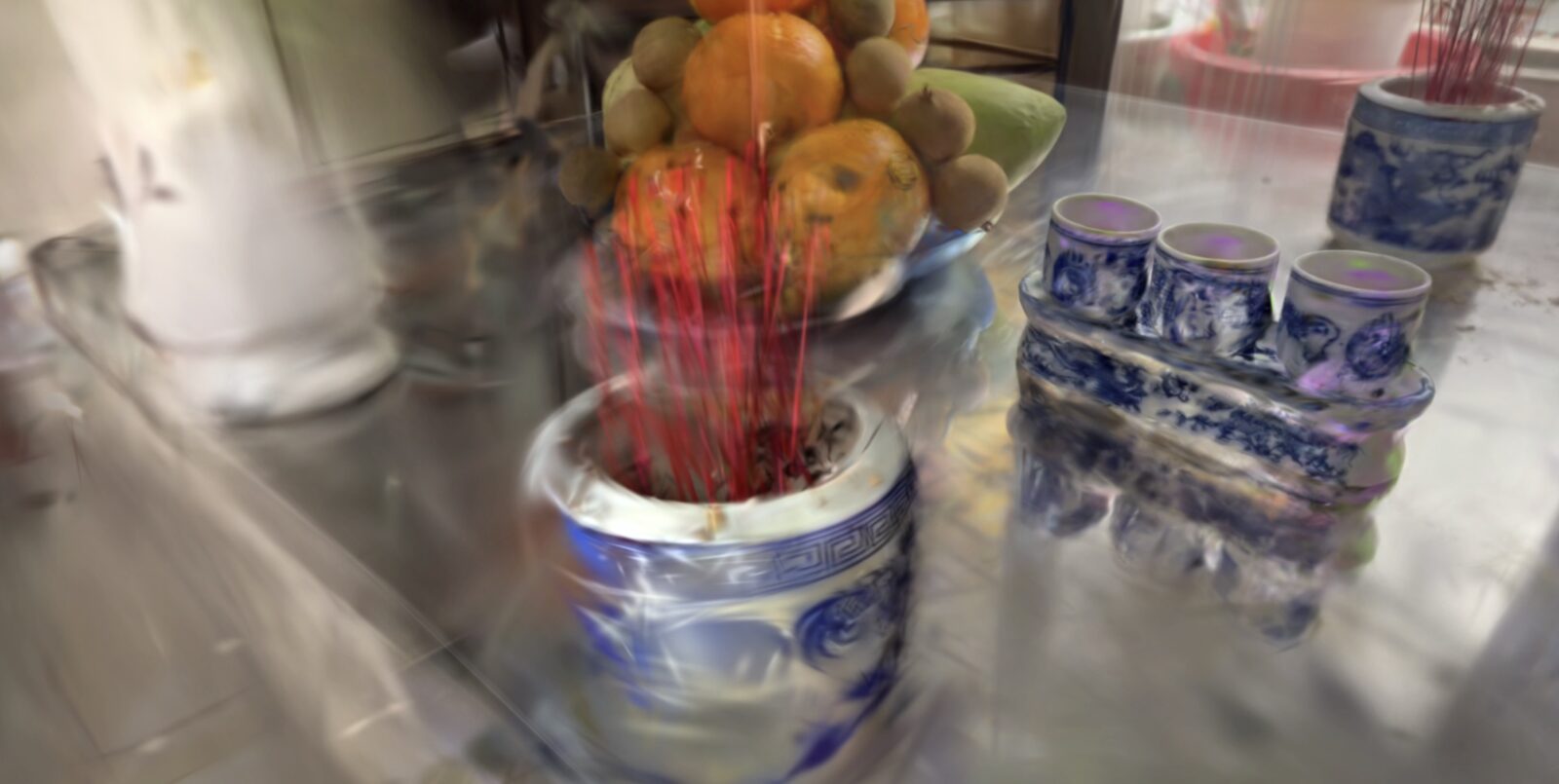
The work presents two layers side by side. In front: a small physical altar table holding a few domestic objects, lit softly, familiar in scale and material. Behind it: a large screen showing 3D Gaussian splat reconstructions of ritual spaces photographed in Vietnam, rendered in a painterly and dissolving visual style.
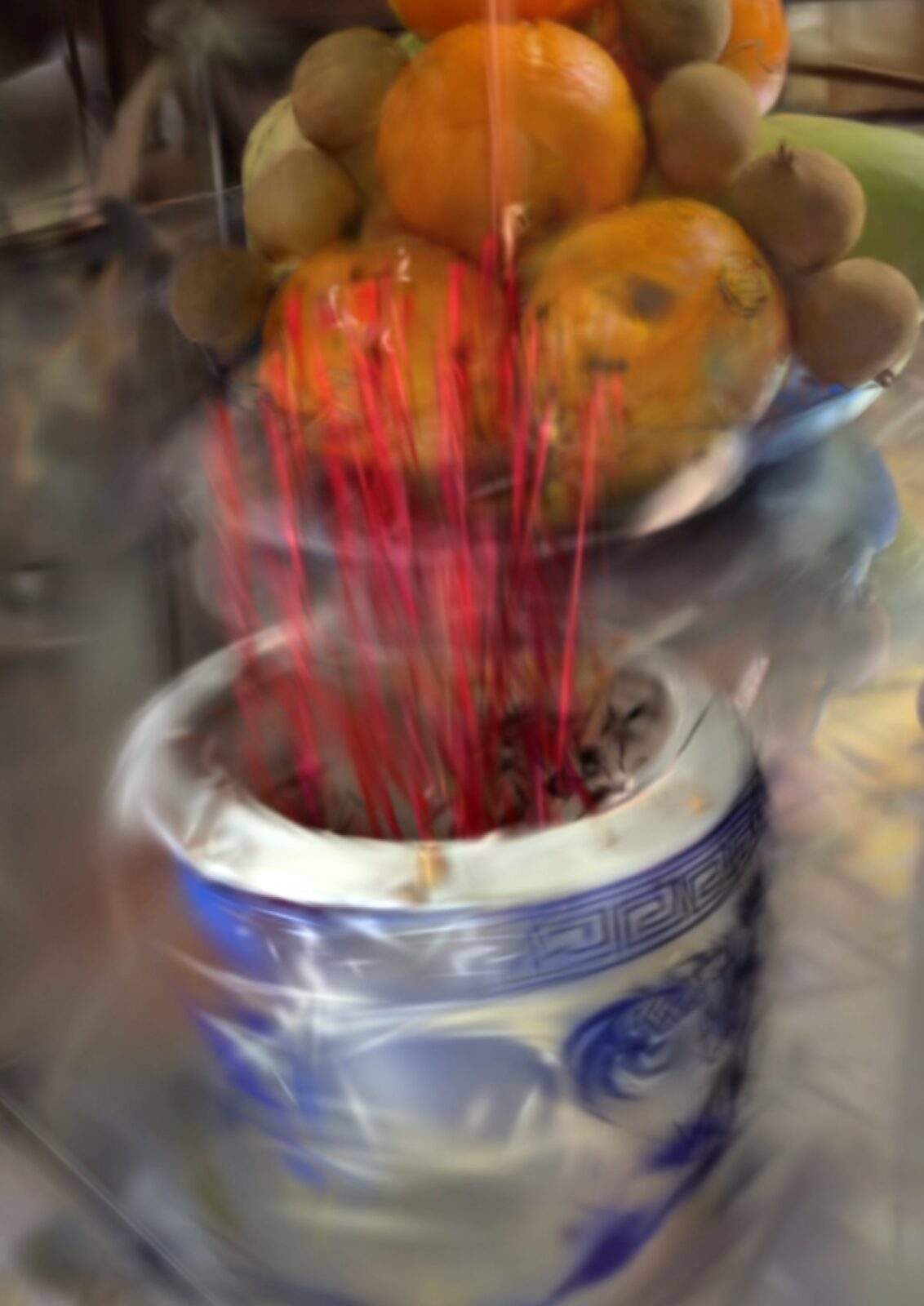
Gaussian splats are generated from photographs and produce a quality that sits somewhere between a watercolour and a photograph. The geometry is incomplete by nature: edges dissolve, surfaces shimmer, some areas hold detail while others fall apart entirely. The palette is warm and dark: incense smoke, tungsten light, aged ceramic, shadow. The screen, or projection, appears as something between a window and a fog. The physical table in front gives the viewer something to stand at, something to look across, before looking through the window.
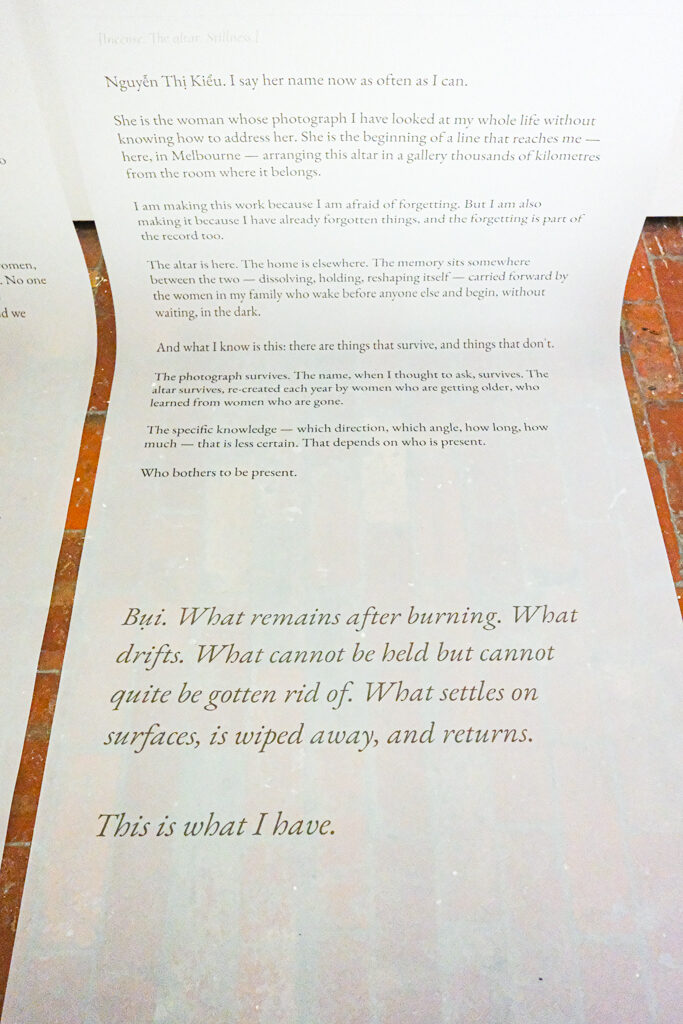
The camera within the digital layer does not move dramatically. It holds still or shifts only slightly in response to the viewer's presence. The Gaussian splat environments slowly cross-fade between scenes: a kitchen altar, a bowl of fruit offerings, the steam rising from a cup of tea. An author's voice tells her family's ritual story, in Vietnamese and English, close and personal, not explanatory.